

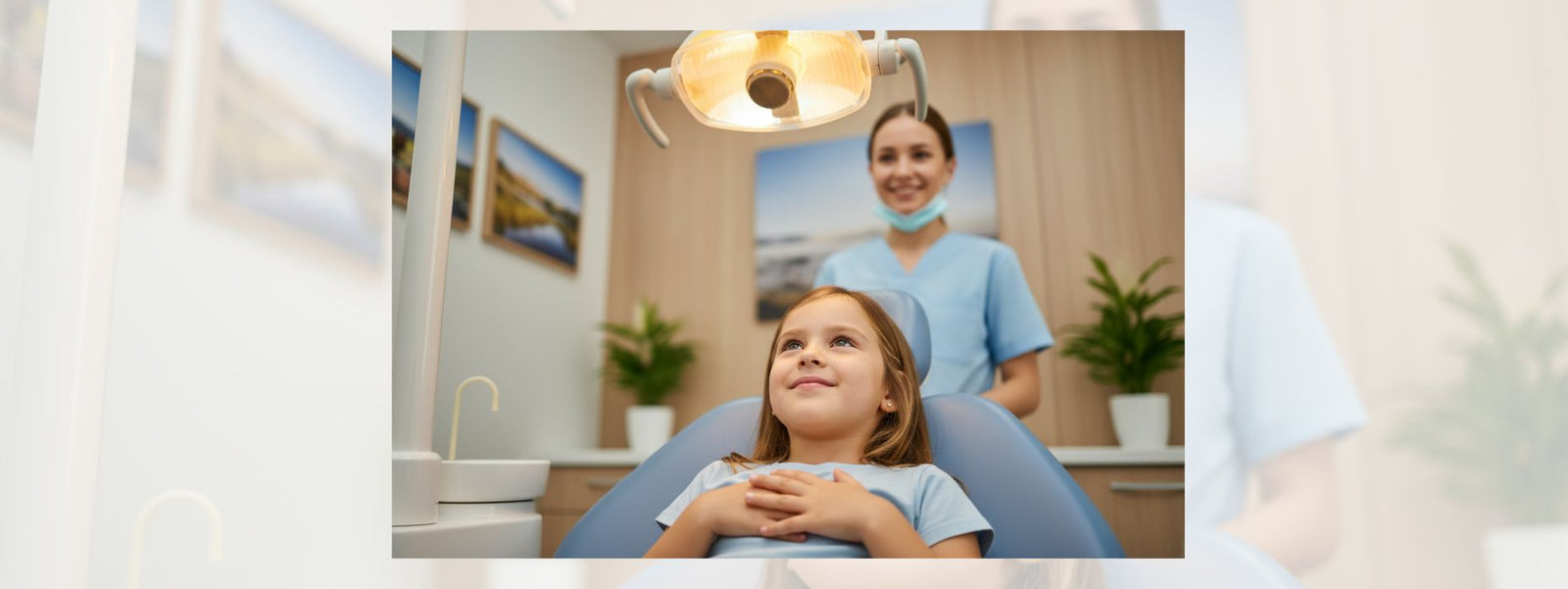

How We Survived Our First Filling
As a speech pathologist, I've spent years supporting neurodivergent children and their families. I've recommended sensory supports, talked through regulation strategies, and celebrated the little wins that make big challenges feel a bit more manageable. These days I'm still using many of those same supports, but more so at home with my own family.
My daughter is a beautifully sensitive soul. She's curious, thoughtful and full of empathy. But she's also someone who experiences the world very intensely. Things like loud noises, unexpected sensations and certain everyday routines can feel overwhelming for her.
Toothbrushing has never been her favourite activity. It’s often a battle depending on her mood. We’ve got a bunch of supports set up to help motivate and encourage, including our toothbrushing development kit. This works really well most days, but as you know there is no magic wand to magically fix these things.
Thankfully, due to careful planning, selecting the right dentist and having her attend visits with me for check ups, we’ve mostly found the dentist to be an activity that she participates in happily. She especially loves the sticker, tattoo and toothbrush rewards at the end! Unfortunately during our most recent checkup we found out she needed her very first filling. My mind immediately went into overdrive.
When someone needs a filling... and you're anxious
I'll admit something…. I absolutely dread the dentist myself.
It's only recently that I've started understanding why. Looking back, so much of my own anxiety seems to stem from sensory sensitivities and the anticipation of uncomfortable sensations that I couldn't really explain as a child. I’ve also never been really good at engaging in tasks I don’t enjoy, or at sitting still for very long.
Knowing how hard I find dental visits combined with my understanding of her obvious sensitivities, I couldn't stop thinking about how I was going to help my daughter get through hers.
Thinking beyond ear muffs
My first thought was noise-cancelling ear muffs. These are our go-to for lots of things and offer a lot of support and reassurance for my daughter. They're fantastic for many situations and can definitely help reduce anxiety in waiting rooms or during parts of an appointment.
When thinking about the dentist though… dental drills are a little different.
Much of what we experience isn't simply sound travelling through the air; it's vibration travelling through your teeth and jaw. Anyone who's had a filling knows that distinctive feeling. For me, I remember it felt like it was vibrating through my entire skull.
I figured we would still pack our ear defenders just in case. We also included a couple of favourite fidgets to help with calming and regulation. But I knew we'd probably need something else too.
A little inspiration from the Royal Children's Hospital
A few weeks earlier I'd taken both of my daughters for blood tests (parenting certainly keeps you on your toes!). The experienced nurse used a vibrating device during the procedure to help distract from the discomfort. It immediately reminded me how powerful vibration can be as a sensory strategy.
That experience stayed with me. Then I started thinking about how helpful this might be during a dental appointment, where the vibration somewhat reminded me of the drilling feeling.
So before our dental appointment, I brought home one of our Vibrant Hummingbird Wearable Vibrating Calming Pendants to introduce to my daughter.
It can be held in the hand like the hospital device and can be worn around the neck or held against different parts of the body during stressful moments. It provides steady (and quite intense) vibration that offers another sensory input for the brain to focus on during overwhelming experiences.
Sometimes giving the nervous system something predictable and calming can make all the difference.
The other ingredient that mattered: a wonderful dentist
The pendant certainly wasn't the whole story. Our dentist deserves so much credit. From our very first visit, she's always taken a graded, child-led approach. She never rushes. She explains every step before it happens, lets my daughter touch and explore the instruments on her hand first, and checks in regularly to make sure she's feeling okay. She even taught her a hand gesture to indicate if she needed a break! These things all helped my daughter to feel more in control.
That sense of predictability and trust is incredibly important for all children, but especially for those who experience anxiety or sensory differences.
What I've learned as both a speech pathologist and a mum
One thing I often tell families is that regulation isn't about "sitting still" or "being brave." It's about helping their nervous system feel safe enough to cope.
Sometimes that's through movement.
Sometimes it's deep pressure.
Sometimes it's chewing.
Sometimes it's vibration.
And sometimes it's simply knowing there are adults around who understand and are willing to adapt.
There isn't one strategy that works for every child, but having a few sensory tools available can make unfamiliar experiences feel much more manageable.
And I’m proud to report that our first filling went pretty well. It wasn’t her favourite activity, but we got through it and she still has positive feelings towards the dentist (phew).
If you or your child are anxious about the dentist, a few things that may help:
- Visit the dental clinic beforehand just to look around
- Choose a dentist who is happy to work at your pace
- Talk through what will happen using simple, honest language
- Bring familiar regulation supports like fidgets, weighted items or a vibrating sensory aid
- Consider ear protection for the waiting room or quieter parts of the appointment, even if it can't block every sensation during treatment
- Celebrate the effort, not just the outcome
Sometimes the smallest supports make the biggest difference. As professionals, we spend years learning about regulation. As parents, we get the privilege (and sometimes the challenge!) of putting those ideas into practice with the children we love most.
This experience reminded me that sensory supports aren't just for therapy sessions or classrooms. They're everyday tools that can help children navigate real-life moments that feel big and scary.




Leave a comment (all fields required)