

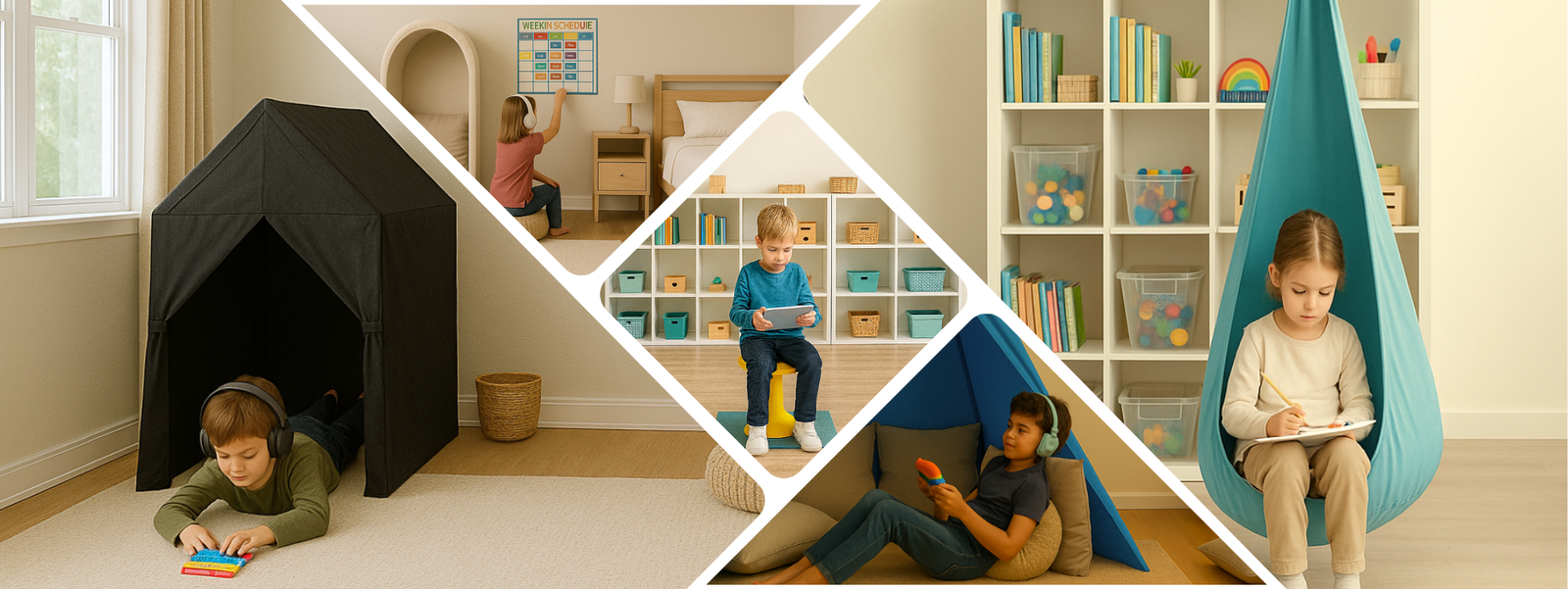

In a busy household with multiple children, it’s completely normal for one child to feel overwhelmed, especially if they are on the anxious side, have additional needs or are neurodivergent. This is exactly what inspired me to create a dedicated calm down corner for my daughter. With two younger siblings (3 years and 18 months) bursting with energy, she often needed a quiet, soothing space where she could retreat, breathe, and reset. She also enjoys setting out her toys neatly, or lining them up, so you can imagine how distressing it was for her when her baby brother came crashing through to “play”.
The little corner we created has become her safe place for emotional regulation, big feelings, and quiet moments. It has been particularly useful for her after long days at kinder, and I can imagine it will get a lot of use when she starts big school next year.
Over the years I’ve worked with countless kids who have been “angels” at school, only to come home and have an absolute meltdown for hours. For some, it would even happen as soon as they got into the car at pick up. These days, this is more commonly known and is referred to as after-school restraint collapse. It happens because children try so hard to suppress their emotions and engage socially all day, which understandably uses a lot of energy! When they finally get into their safe space (the car, with family, or at home), they collapse and release all the this pent-up stress. It is not a sign of naughtiness by any means. For these types of kids, calm down spaces to retreat to after school can be an absolute game-changer.
In this guide, I’ll share the calm down corner ideas that worked best for us, including simple items like calming lamps, comfy seating and sensory toys.
Our OT Tarryn will also show you how to create an on-the-go calming kit. A portable version you can take anywhere; holidays, long car rides, family visits, or busy outings. We hope you find this particularly useful for the upcoming holiday period.
What Is a Calm Down Corner?
A calm down corner is a small space designed to help children regulate emotions using soothing tools, gentle lighting, and sensory supports. It’s not a timeout area. Rather, it’s a comfort zone where children can feel safe, grounded, and in control.
Why Calming Spaces Are Helpful
- Reducing sensory overload
- Encouraging emotional awareness
- Supporting self-regulation
- Helping to prevent meltdowns before they escalate
Our Home Calm Down Corner Setup
Creating a Safe, Soothing Environment
My daughter’s calm down corner is focused around a dark den, as she likes an enclosed space with reduced sensory stimulation. Initially, it sat in a quiet part of our living room, away from noise and busy play areas. Unfortunately this quickly proved to be a complete fail, as her two younger siblings would constantly invade her space and want to play.
In a small house with three young children, it was time to get creative! Since my daughter doesn’t yet sleep in her own bed anyway, I figured her top bunk could be the perfect place to set up her calming space. Somewhere we could hopefully prevent her siblings from invading!

We added soft seating (she loves her mini mouse fold out kids’ sofa), gentle lighting (her favourite bunny lamp), and a few sensory tools she can reach for whenever she needs them.

This worked really well for a few weeks, but then her little brother of course worked out how to climb the ladder to the top!
Thankfully my dad is like MacGyver and he quickly figured out a fix for this, using a bed railing to create a barrier that we could open and close easily and safely.

The Calming Lamp We Used
A calming lamp makes an enormous difference for some kids. As we were using a dark den, it was essential for us. We tested a few options and settled on a soft-glow lamp that casts warm, ambient light. Calming lamps help reduce visual overstimulation and signal that the space is meant for quiet, peaceful time.
Sensory Tools & Calming Toys
We keep a small basket of calming sensory toys like:
- fidget tools
- stretchy toys
- squishies
- weighted support (like a lap bag, blanket or cushion)
- vibrating cushion
These help refocus hands and minds during feelings of overwhelm.
Calm Down Corner Ideas You Can Try at Home
Soft Seating & Cozy Textures
Beanbags, floor cushions, or a small pop-up tent create a snug, safe environment. Even using blankets to make a little fort is a quick, easy and low-cost way to create an instant calming space.
Using Calming Lamps for Gentle Light
Warm, low lighting helps lower stress and encourages quiet time.
Sensory Bottles & Tactile Tools
Calming bottles offer visual soothing, while tactile toys give children something to focus on.
Breathing Tools & Visual Charts
A feelings wheel or “calm-down steps” chart helps kids identify emotions and choose tools.
Creating an On-the-Go Calming Kit
Why Mobile Calming Kits Are So Helpful
Travelling, visiting relatives, or breaking routine during the holidays can be overwhelming for sensitive kids. A portable calming kit gives them familiar tools wherever you go; a miniature version of your home calm down corner that they can use on the move and access when and where it’s needed.
What to Include in Your On-the-Go Kit
Some of my top picks for a portable kit include:
- Ear defenders + carry case
- Beurer mini massager
- Mini Magnetic Pad
- Magic sphere puzzle ball
- Squishy jelly animal fidget
- Therapy putty 85g
- Sensory ooze tube
- Halo Picky bands
- The emotional regulation resources pack(great to keep stored away and switch new fidgets in and out for variety)
Ideas for Storing Your Kit
- A zipper pouch
- A small backpack your child carries
- A car-only calming kit stored in the seat pocket
-
Have a parent keep an extra item or 2 handy in their pocket or bag, so it’s accessible any time
When to Use Your Mobile Calming Kit
- Long car rides
- Flights
- Busy shopping days
- Family gatherings
- Doctor or dentist appointments
- Holiday events with lots of noise or people
- On the way to birthday parties, family gatherings or other social events
- Any time it's needed to help reduce anxiety and stress and promote calm and focus
Home vs. Travel: Choosing the Right Tools for Each Space
As a paediatric OT, one of the biggest conversations I have with families is: “What do I actually need at home, and what should I take out and about?”
The truth is: different spaces call for different tools. What works beautifully in the calm predictability of home may be totally impractical at the supermarket, the park, or a family gathering.
When you’re on the go, you need portable, quiet, durable tools to help support your child when they’re in high stimulation environments. We’re looking to use tools that support quick regulation, quiet focus, and help with smooth transitions, all of which can be used in smaller spaces and while on the move.
As a parent to two younger children, I always make sure I have a combination of calm passive tools, as well as supports to keep them busy and feeling like they have some ‘structure’ during times they need a distracted from dysregulating environments. Passive tools would be things like our Ooze tube, mini massager, and squishy jellys, while more active regulating tools would be the magic sphere puzzle balls, halo picky bands and the magnetic mini pad.
FAQs About Calm Down Corners & Calming Kits
What age is a calm down corner suitable for?
Kids as young as 2 years old can use calm down corners with simple tools, and older children benefit from more advanced sensory items.
How do I teach my child to use the calm down corner?
Model it during calm moments. Show them how to pick tools, breathe, and recognise when they need a break.
What should I put in a calm down corner at home?
Great basics include calming lamps, calming bottles, calming sensory toys, soft textures, and visual supports.
What goes in an on-the-go calming kit?
Portable sensory toys, small bottles, headphones, and quiet tools that help regulate emotions while travelling outside of home.
How do I keep my calming kit organised?
Use pouches or compartments and refresh items regularly so they stay interesting and effective.



Leave a comment (all fields required)